Babu Noushad, University of Buraimi, shares how a simple twelve-word memory exercise helps new teachers plan lessons that respect the limits of working memory.
I recently conducted an online session called ‘How Learners Learn’ as part of the Foundations of Teaching in Optometry (FTO) series organised by the India Vision Institute. These sessions were aimed at training young optometry educators on how to plan lessons effectively. Before saying anything else, I ran a small activity with the group.
I displayed twelve unrelated words on the screen: river, lamp, chair, cloud, pencil, tiger, bridge, candle, ocean, guitar, mirror, rocket. I gave them ten seconds to look at those words; no writing down, no rehearsing, just looking at them. Then I took the slide away and asked them to write down the words they could still remember.
Almost no one got more than seven. Most managed around five.
That gap, between the twelve words presented and the five recalled on average by a group of capable and attentive individuals, does not reflect a flaw in their memory. That is exactly how our memory behaves. Once a teacher understands why it happens, many everyday teaching problems start to make sense.
Three stores, one bottleneck
Cognitive psychology has described learning as a journey of information through three memory systems (Sweller et al., 2019). The session I delivered was designed to walk participants through these systems and, at every stage, ask: “So what does this mean for how I plan my lesson?”
Sensory memory receives all the information that reaches us through our senses, but can hold it for less than a second. If our attention doesn’t select something from it almost immediately, it is gone. This is the argument for opening a lecture or a clinical training session with a ‘hook’ that clearly holds the learner’s attention. It could be a question, a real-life case or a surprising claim.
Working memory is where the real bottleneck lies, and it was this limitation that I made explicit to participants through the twelve-word activity. It is estimated that we can hold only four items, give or take one, simultaneously in our working memory for about twenty seconds. Beyond that, unrehearsed items decay. This has nothing to do with how well we, as teachers, explain the content. If a learner’s working memory is full, any additional information doesn’t get in. It is like working on a very small table that can hold only four or five items. To add another, you must first remove one that is already there.
I illustrated this with a scenario every optometry teacher can recognise: a second-year student in their first days of clinical rotation, in front of a real patient, is told all ten or so steps of a direct ophthalmoscopy procedure at once. Every step is correct. But that is roughly ten pieces of information delivered as one, aimed at a working memory that can hold only about four.
Long-term memory is the destination where information gets stored. It doesn’t simply store; it organises new information around our existing mental structures of similar or related information, known as schemas. New information can only stick to a related schema. This explains why we struggle to understand a new concept or idea if the necessary background information is not available in our long-term memory. This helped participants see the importance of asking a few questions to activate students’ prior knowledge before introducing a new concept or topic.
Two things a teacher can actually do about it
Understanding the limitation of working memory is only useful if it changes teaching practice. So the session moved from theory to classroom strategies.
The first is chunking: breaking difficult learning content into smaller, sequenced pieces or idea units instead of pouring it all in at once. Applied to the ophthalmoscopy example, the same information becomes far more manageable if it is delivered in three or four sequential stages, with time to practise each stage in between.
The second is elaboration: pushing learners to process information rather than asking them for simple recall. In day-to-day teaching, this means asking learners “Why does this happen?” rather than “What is this called?” Asking learners to explain a concept in their own words ensures deeper learning than asking them to recall what they have memorised.
Neither strategy needs more time or effort. Each simply asks the teacher to deliver the content in small, manageable chunks and to respect the four-item, twenty-second ceiling of working memory.
A checklist to guide new teachers
What I think tied the whole thing together for participants was Gagné’s Nine Events of Instruction (gain attention, state objectives, recall prior learning, present content, provide guidance, elicit performance, provide feedback, assess performance, enhance retention and transfer) (Gagné, 1985). These nine events offer an organised way to plan teaching sessions that addresses the limits and characteristics of our memory system. In the session, we turned Gagné’s events into a ready-to-use checklist to guide participants in planning their lessons. Gaining attention is the sensory memory gate; recalling prior learning is schema activation; presenting content in manageable chunks respects working memory limitations; eliciting performance ensures rehearsal; and assessing performance asks for memory retrieval. For a teacher, these steps are not new. But now they know the reason behind each step, and how each one supports learning.
Why I keep coming back to this with new teachers
Everyone in that session had surely, at some point, sat through a session and got lost halfway through, and has probably delivered one like it too. The twelve-word activity gave them the problem upfront, which made it easy to walk them through the theory: chunking, elaboration, schema activation and memory retrieval. Experiences like this help learners process information more deeply and, later, apply it in their own practice.
How do you work within the limits of working memory in your own teaching?
Gagné, R. M. (1985). The conditions of learning and theory of instruction (4th edn). New York: Holt, Rinehart and Winston.
Sweller, J., van Merriënboer, J. J., & Paas, F. (2019). Cognitive architecture and instructional design: 20 years later. Educational Psychology Review, 31(2), 261-292.
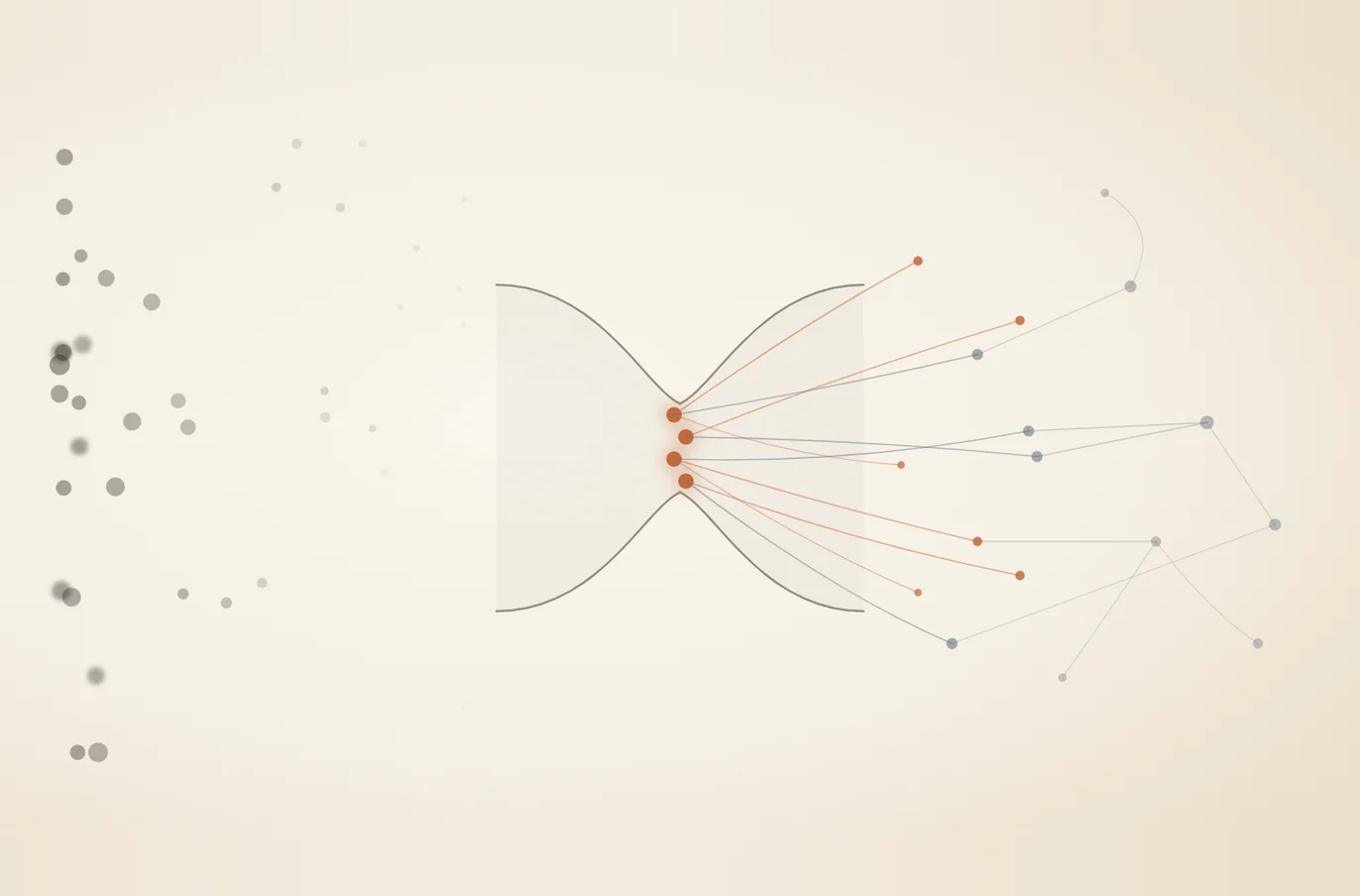
(The cover image depicts unorganised information in our sensory memory; the bottleneck is working memory, and beyond it lie the more organised schemas of long-term memory. Image was created using AI )
Babu Noushad is a faculty member in Optometry at the University of Buraimi (UoB), Oman, and a PhD candidate at the School of Health Professions Education, Maastricht University. At UoB, he leads two faculty development programmes: the Skills Enhancement Series in Education Practices (SESEP) and an Advance HE Fellowship preparation pathway. His research in Health Professions Education focuses on metacognitive monitoring and predictive cues.