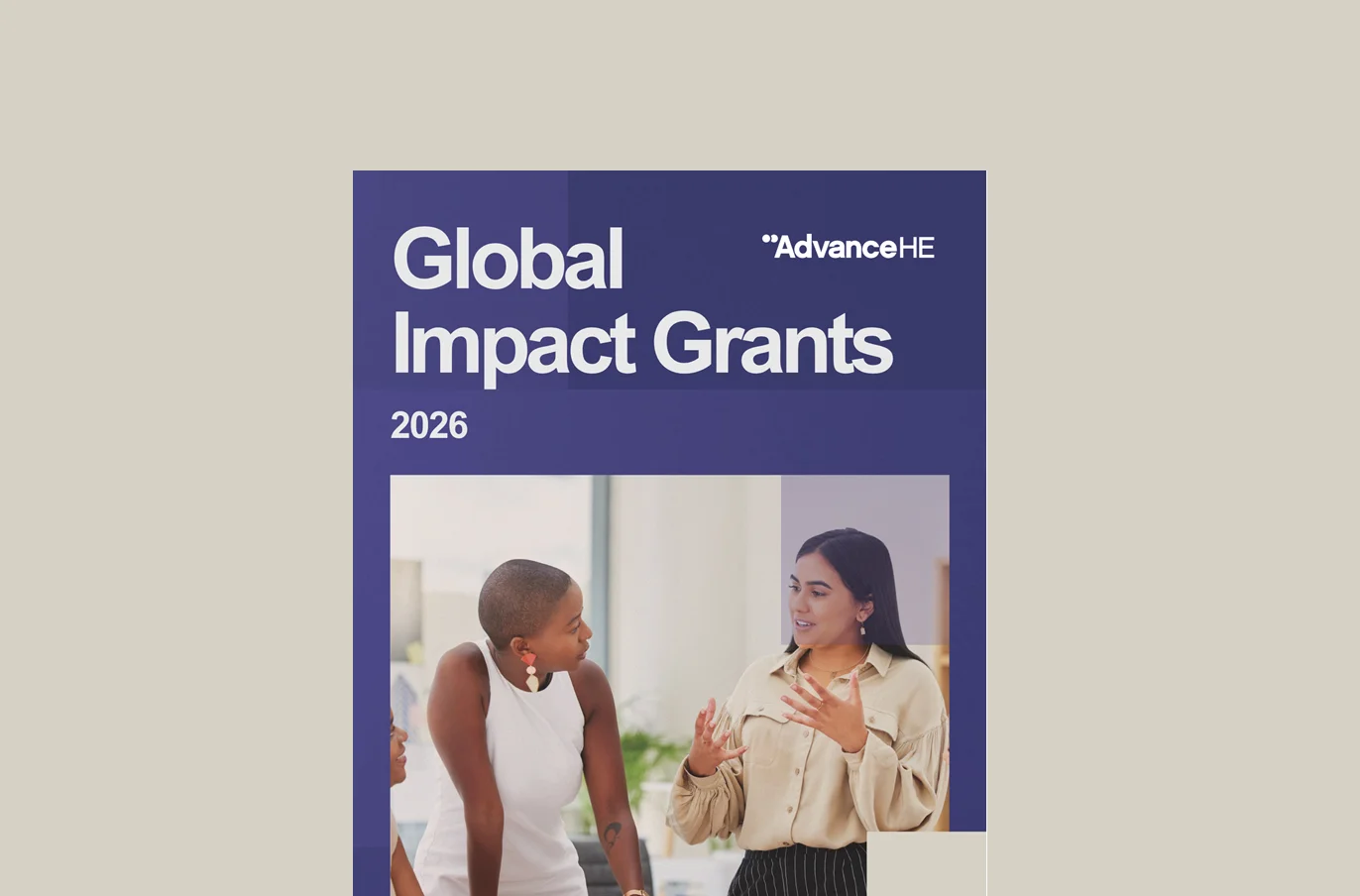
13 universities across four continents have been recognised in this year’s Global Impact Grants, Advance HE’s annual funding opportunity to share good practice in higher education, with case studies ranging from AI-assisted teaching to targeted support for care-experienced students.
We’re delighted to share the case studies from the 2025/26 round of Global Impact Grants. The collection spans institutions in Australia, Vietnam, Ireland, the Netherlands, Malaysia, China and Mauritius, reflecting the international breadth of innovation taking place across the sector.
AI generates innovation
Artificial intelligence features heavily among this year’s winners. At Xi’an Jiaotong-Liverpool University in China, researchers built an ‘agentic AI’ tool, InQ2Plan, to help academics design action research projects, moving beyond an earlier chatbot that staff found too rigid for specific queries.
A collaboration between the University of Nottingham Malaysia, Sunway University and the University of Nottingham UK examined how institutions can move past outright bans on generative AI towards more coherent policy. Drawing on surveys and interviews with staff and students, the project built a framework intended to embed AI use in assessment in ways that are authentic, inclusive and sustainable.
I’d like to thank all the awardees for their work putting together this fantastic collection of good practice case studies. Every year we offer these grants, I am impressed by the breadth and depth of the innovation taking place across the world, and this year is no different.
Ian Hall, Head of Partnerships (International)
We hope that the case studies will provide ideas and inspiration for institutions across the world to solve some of the challenges they are facing over the coming years.”
Focus on inclusivity
Across other themes, at the University of Galway in Ireland a dedicated support role for care-experienced students has helped lift progression rates and cut withdrawals, from 12% in 2023-24 to 8% in 2025-26. The initiative, built on partnerships with organisations including Tusla and the Irish Foster Care Association, has since fed into a new national network, the Care Experienced Educational Network of Ireland.
Elsewhere, a joint project between Srinakharinwirot University in Thailand and Breda University of Applied Sciences in the Netherlands used a ‘living lab’ model to address long-running conflict between local communities and elephants around Kuiburi National Park.
Other case studies in the collection cover doctoral wellbeing, gamified learning, academic onboarding and intercultural collaboration, at institutions including Queensland University of Technology, RMIT University, Adelaide University, Monash University and the Open University of Mauritius.